Planning
a Fiber Optic Installation
Planning
the job is the first task of any installation. Proper
planning
is important to ensure the job is installed properly,
on time and meets
cost objectives.
We assume
you have a finished design for the project, know where
and how
everything will be installed and have any special
requirements like
permits ready. We can also assume you have a
completion date, hopefully
a reasonable one, to work toward. The installation
process has many steps, so we have created an Installation
Checklist to help you plan the installation.
The first step is to create a
schedule which will be the centerpiece of the planning
process. In
order to schedule a job, you need a lot of
information, much of
which can be acquired from estimates you did when
bidding the job. When
buyers price the components to be used on a job, they
should get
delivery times as well as prices. Some items used on
fiber optic
projects should be stock items, like connectors, patch
panels or splice
closures. Cables, however, may have to be made to
order.
Many fiber optic cables are custom items, depending on
the cable type,
number and types of fibers and color coding. Custom
cables will often
be less expensive because they don’t have extra fibers
for
specifications you don’t need, for example, but they
will have longer
lead times since they must be made from scratch.
Whenever specifying a
fiber optic cable, always try to have a few extra
fibers available,
just in case fibers are damaged during installation.
The astute contractor tries to always use the same
types of components
on every job so they are familiar with not only the
installation
procedures but the typical costs, yield (i.e. number
of connectors or
splices that will pass testing first time) and any
problems likely to
be encountered.
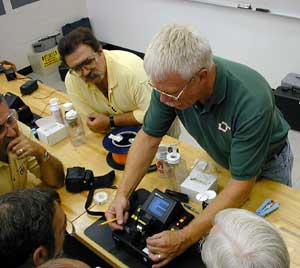
If any components or tools are not
familiar to the installers, they need to learn how to
use and/or install them
correctly, either by experimenting in the office on
off-time, getting
manufacturers to train them or attending a training
course. The need for training may also arise if
new equipment types are required, such as outside
plant cable placing
tools, splicers or new types of test equipment. The
cardinal rule of installation
is never take an unfamiliar component or tool on the
job; it’s a recipe
for disaster.
Buyers need to order the components
when the job is
acquired, scheduling delivery to the job site either
to have everything
available before the installation begins, or on a
large job with an
extended schedule, according to how long the
installation of that
component will take. Here you also need to plan on
where the components
will be delivered to, either a staging area in your
warehouse, for
example, or to the job site.
Components delivered
to the job site may require security. Theft can be a
problem with cable
particularly, since many thieves think all cables
contain copper and
the price of copper is still high, both erroneous! But
vandalism is
another concern, requiring components be either locked
up or if too
large to put indoors like large spools of cable or
fiber optic
innerduct, may require on site overnight guards.
Next, one needs to schedule labor. Again, the
estimates should tell you
how many installers of what experience will be needed
and how long they
are expected to need to complete the installation. If
any training is
needed, additional time may need to be added to the
schedule.
Having covered labor and materials in the schedule,
the planning is
almost done. Review the schedule with everyone
involved to get them on
board and start the processes, beginning with
acquiring materials. Then
add to the plan a review of safety rules for
supervisors, installers
and anyone expected to be on site. Also add notes to
keep all scrap
cable, connectors, etc. to package and present to the
user in case they
are needed for future restoration.
If the start
date is not tomorrow (because the customer wanted it
yesterday!) and
you have other projects in the interim, pull out this
schedule
regularly to check if everything is on schedule for
the start date to
prevent any last minute surprises.
More about Fiber Optic Projects
More about Project Planning and Management
More
Topics On Fiber Optic Installation
Table
of Contents: The FOA Reference Guide To
Fiber Optics
|