Search
the FOA website:
There is so much technical material on the FOA
Online Reference Guide it can be overwhelming. If you
are looking for a specific topic, we suggest you use our
web site's Table
of Contents and the
site
search
(above) which will search the FOA website, FOA Online
Reference Guide, FOA Newsletter, etc. to find
relevant materials.
To
keep up with updates to the FOA Guide, sign
up for the FOA email newsletter or follow us on Facebook,
LinkedIn,
Pinterest,
Twitter
and YouTube.
|
The
FOA Knowledge Base For Fiber Optics & Cabling
Since
it began in 1995, the FOA has been developing an extensive
knowledge base for fiber optics. Until we began, most
information on fiber optics was in the form of academic
textbooks, not appropriate for installers and contractors,
and application notes from manufacturers on their specific
products. The FOA focus was on the practical side of fiber
optics, the design, installation and operation of fiber
optic communications
networks.
By tapping the knowledge of dozens of technical experts
worldwide who were working in the field and training other
fiber techs, the FOA has created an extensive knowledge base
on fiber optics and premises cabling. FOA has published this
material online and printed in textbooks.
With the advent of YouTube, we created a channel and began
uploading instructional videos, now over 100 total,
including more than 50 short lectures on fiber optic topics.
This knowledge base also allowed FOA to create Fiber U
online training which now includes many free online self
study courses.
And the FOA network of worldwide experts has also worked to
create fiber optic curriculum resources which are made
available at no cost to appropriate organizations.
The
FOA knowledge base is widely used. About 1/2 million users
download 4 million pages from the FOA guide every year. The
FOA YouTube videos have been viewed 3 million times. And the
FOA textbooks are used to train fiber optic techs around the
world - even in Spanish and French.
The FOA knowledge base includes suggested materials in
helping individuals to become prepared for FOA
certification exams. The information provided is not
intended to be inclusive of all potentially useful
resources, nor does inclusion in this knowledge base
constitute an endorsement by the FOA.
There are several ways the FOA makes its knowledge base
available to reach all interested users. Here's more details
on each of them.
FOA
Online Reference Guide To Fiber Optics & Premises
Cabling
The
FOA Online Reference Guide
To Fiber Optics and Premises Cabling has been
created as a free service to the fiber optics and
communications industries, as well as any other field that
uses fiber optics. It encompasses almost a thousand pages of
technical information, online and video tutorials and tech
bulletins covering every aspect of fiber optics and premises
cabling. Everyone
can use this as a reference source for fiber optics and
premises cabling. Students at FOA-Approved Schools can use
this as a reference textbook for FOA certifications and
those already certified can use it for a reference on the
technologies or practices.
The
goal of this guide is to provide an extensive, reliable,
non-commercial source of information on fiber optics and
premises cabling (copper, fiber and wireless) for educating
students, network users, designers, installers, contractors,
etc. In creating the materials, we considered the needs of
many readers and attempted to provide for their special
needs.
- Everyone, of course, needs knowledge of the basics of
fiber optics and skills in the processes used in designing
and installing systems.
- Network owners/users will be better able to understand
their networks and work with contractors and installers to
optimize their networks and maintain, restore and upgrade
them properly.
- Contractors/designers will better understand how fiber
is used properly, how to design efficient systems and how
to communicate with their customers.
- Installers will find the basic information on fiber
optic components, how fiber optic cable plants are
installed, including tutorials of hands-on installation
practices and how different types of installations require
special skills and procedures.
- Special types of users, e.g. MIL/govt, utility,
industrial, FTTx, will find special sections covering the
particulars of those applications and how that affects
design, installation, etc.
This
reference guide covers the differences in fiber optic
applications, e.g. communications vs. lighting or
inspection, OSP vs premises, etc. to provide readers with
knowledge about the varied applications of fiber in today's
world.
The
organization of this material is chosen to make it
appropriate for teaching fiber optic technology,
manufacture, installation, design, testing and other related
topics and to provide a reference for the FOA certification
exams. As a reference, the Table
of Contents
will allow anyone to find topics of interest. The Table of
Contents is the master link to the material and is linked on
every page.
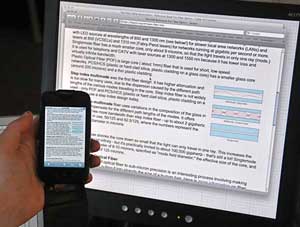
The
format of all this material is simplified to allow fast
loading with any browser and use on most mobile devices like
this smart phone or tablet.
The FOA
Online Reference Guide also includes two famous guides for
beginners:
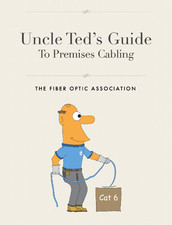
Remember, as an online reference, this material is expanded
and updated regularly to reflect changes in technologies and
applications. It's always going to be incomplete, since
we're always finding new things to add to it. It you have
suggestions on how to improve it, contact us at
info@thefoa.org.
To
keep up with updates to the FOA Guide, sign
up for the FOA email newsletter or follow us on Facebook,
LinkedIn,
Pinterest,
Twitter
and YouTube.
FOA
Reference Textbooks
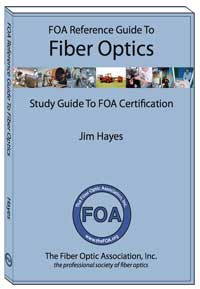
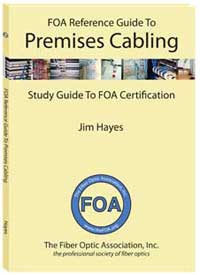
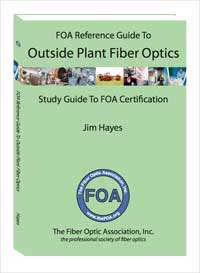
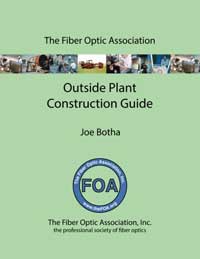
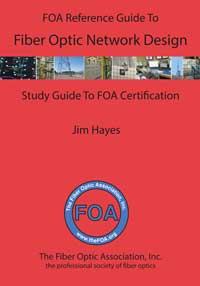
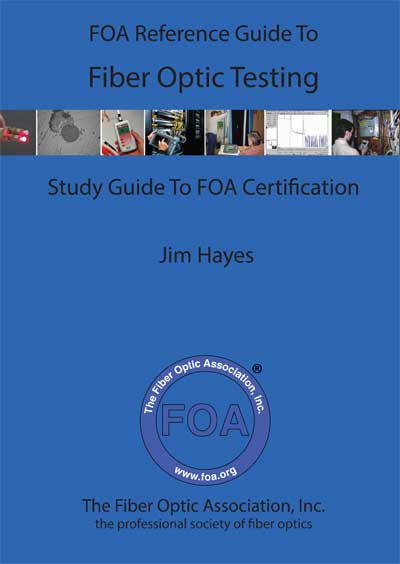
Fiber Optics - Premises Cabling -
Outside Plant - OSP Construction - Network Design - Fiber
Optic Testing
Another benefit of the FOA knowledge base is we can publish
our own textbooks for those who prefer printed books or
eBooks on their tablet or Kindle. There are FOA textbooks
covering basic fiber optics, outside plant fiber optics,
premises cabling (copper, fiber and wireless), OSP
construction, fiber optic network design and fiber optic
testing. The basic textbook is also available in Spanish and
French. The design book is available in Spanish.
Click on each book image for more information about the
book.
Go
here for information on all books.
FOA
Videos on 
- The
advent of YouTube offered a unique opportunity for FOA to
share its know;edge base with others via video. The FOA
has created a special FOA channel on YouTube, thefoainc,
where we're posting video lectures on more than 50 topics
and instructional videos for everyone's use. We have
videos on fiber optic cable preparation and, for those
working on premises cabling, termination of UTP cable.
Watch for lots more!
A
complete listing of FOA YouTube Videos is on the Guide's
Table of Contents
Fiber
U -
Free Online Training

Fiber U
offers free online self-study training and tutorials based
on the materials from the FOA Guide. There are more than a
dozen subjects, most are also preparation for FOA
certifications. You can get certificates of completion for
most subjects.
Educational
Resources

FOA
uses its knowledge base and network of advisors to provide
assistance to educators and trainers in developing their
teaching abilities and the educational resources for use in
their classes. FOA and its advisors have extensive
experience in traditional educational environments, online
training and blended learning. Using the FOA knowledge base
and resources, they can select from materials appropriate
for their programs. All this assistance is provided at no
cost as part of the original charter of the FOA.
FOA offers free teaching kits for STEM (science, technology,
engineering and math) teachers in k-12 grades featuring
plastic optical fiber that visually demonstrates how fiber
optics transmits information as pulses of light and provides
a basis for additional experiments and science projects by
students. Read
more.
For technical high school and college classes, FOA has
modules for teaching fiber and cabling as part of science,
engineering, IT and telecom courses that explain to students
how these topics use fiber optics and cabling as
communications media.
For adult education as well as technical
high schools and colleges, we have comprehensive resources
available that include classroom materials and hands-on lab
manuals appropriate for classes leading to FOA
certifications.These resources extend from the basics of the
media to complex issues related to construction,
installation, testing, operation and restoration of
networks.
Contact FOA for more details about how its resources can be
used in development of appropriate training programs.
Usage
Policy On FOA Knowledge Base Materials
The
FOA will generally grant permission on request have the
material used for reference, education, etc. on a non-commercial
basis as long as the source (FOA) is identified with
attribution and no claims are made that FOA endorses the
user, their products or services. FOA does not allow the
commercial use of its copyrighted material to promote any
company or organization.
More
information on FOA use policy.
A
Note Of Appreciation
The
material has been produced and reviewed by a many
contributors whom we wish to thank for their work in
contributing, creating and reviewing the materials included
here: Jim Hayes, Editor, Contributors: Elias Awad, Bob
Ballard, Joe Botha, Craig Bowden, Duane Clayton, Tom
Collins, Doug Elliott, Ian Gordon Fudge, Jorge Garcia, Bill
Graham, Arnie Harris, Karen Hayes, John Highhouse, Ron
Leger, Eric Loytty, Terry O'Malley, Eric Pearson, Dan
Silver, Jim Underwood, Chuck Vella and many, many more.
Note: This
information is provided by The Fiber Optic Association,
Inc. as a benefit to those interested in designing,
manufacturing, selling, installing or using fiber optic
communications systems or networks. It is intended to be
used as a overview and/or basic guidelines and in no way
should be considered to be complete or comprehensive.
These guidelines are strictly the opinion of the FOA and
the reader is expected to use them as a basis for
learning, reference and creating their own documentation,
project specifications, etc. The FOA assumes no liability
for their use.
Interested
in linking to FOA webpages or reproducing FOA technical
materials? Here
is the FOA policy on use of our technical materials.
|