- Fiber
Optic Specialist
Certifications
-
techs have been
certified by the FOA
Note: As of 2023, all new and renewal FOA Certifications will receive online certification credentials. Details here.
FOA
Specialist Certifications
For those wanting to learn more about specialized fiber optic applications
or who wish to develop greater skills in the process of fiber optic
installation, FOA offers specialist training and certifications.
FOA specialist training and certifications are available in three
categories, Skills-based, Applications-based and Fiber
optic network design.
- Skills-based
certifications are those involving hands-on process related to the
installation of fiber optic networks such as outside plant (OSP)
installation, splicing, termination and testing. Skills-based
certifications require a CFOT or CPCT as a prerequisite for both
classes at a FOA-Approved school or application for direct
certification (Work-To-Cert).
- Applications-based
certifications are based on specific applications of fiber optics
like fiber to the home (FTTH),
optical LANs (OLANs), etc. These application-based certifications
require a some knowledge of fiber optics as a prerequisite.
All FOA applications courses have a corresponding online
self-study course in that topic on the FOA's free Fiber
U online training website leading to a certificate of
completion or for use with the Direct Certification
program.
- Fiber optic
network design - This
is a specialist application certification covering fiber optic network
design intended
for network owners, IT personnel, facilities managers, network
designers, estimators or technicians involved in the design or
installation of fiber networks. This course is especially
recommended for network owners and planners who may not be familiar
with the process of fiber optic network design as it can make their
jobs easier and their projects better. There is no prerequisite for
the design course; basic fiber optic information is provided in the
curriculum.
Note:
Techs doing fiber installation for
any particular application should have a CFOT to be qualified for doing
installation work. The CFOT is the basic certification required for all
installation personnel.
Click on any
specialist certification for more details.
Skills-Based
Specialist
Certifications For Techs Involved With Fiber Optic
Installation
Fiber
Characterization (CD, PMD, SA) (CFOS/FC)
Applications-Based Specialist
Certifications For Users, Designers, Contractors and
Installers
Fiber
To The Home/Curb/etc. (FTTx) (CFOS/H)
Optical LANs (OLANs) (CFOS/L)
Fiber
Optic Network Design (CFOS/D)
FOA specialist
certifications are available two ways -
- Taking
a training course through
an FOA-Approved training
organization and taking the FOA exam
- Direct Certification Direct from the FOA by demonstrating appropriate field experience
and applying to the FOA to take the exam online. All
direct FOA certifications require documented experience in the
application; those without experience may take the courses
online at Fiber
U and get a Fiber U certification of completion
which can be submitted as part of the requirements when applying
for certification.
All FOA CFOS Certifications Require:
- Prerequisites which may
include certifications (CFOT or CPCT), field experience or appropriate
background.
- Meeting the knowledge,
skills and abilities (KSA)
requirements specified for the certification.
- Completing
training courses from FOA-Approved schools or
relevant field experience and/or training by manufacturers or
others.
- Passing a Specialist
certification exam
The FOA requirements and exams are based on FOA KSAs.
Studying may be done by taking approved training, reading the
FOA textbooks or the FOA Online Fiber Optic
Reference Guide or self-study programs on Fiber
U.
If you are already a CFOT or CPCT interested in specialist certifications,
you should keep records of your field experience qualifying for FOA
specialist certifications.
The FOA schools
listing includes schools offering FOA specialist classes.
If you wish to apply for certification directly based on your industry
experience, read the information on the FOA Direct Certification
program below on taking the specialist certification exams.
If you are a current CFOT or CPCT, you do not get a new CFOT number when
you get a specialist certification. Upon completion of the requirements,
you will receive a new FOA online certification credential with your new certifications listed.
Your certification number and expiration data will not change.
Skills-Based
Specialist
Certifications For Techs Involved With
Fiber Optic Installation
Skills-based
certifications are those involving hands-on process related to the
design and installation of fiber optic networks such as outside plant
(OSP) installation, splicing, termination and testing. Skills-based
certifications require a CFOT or CPCT as a prerequisite for both classes
at a FOA-Approved school or application for direct certification.
CFOS/O: OSP
Installation
(Skills-based)
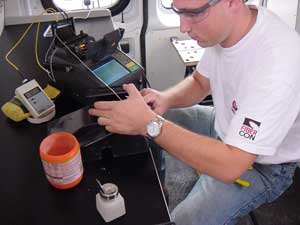
CFOS/O - Certified
Fiber Optic Specialist, Outside Plant - is the FOA certification for
technicians installing outside plant (OSP) fiber optic cable plants and
communications systems. It expands on the CFOT KSAs to include OSP
construction and installation of aerial and underground cable plants. The
skills focus includes installing and cable preparation of OSP cables,
fusion splicing for concatenation and termination and testing with a focus
on OTDRs.
Prerequisites: CFOT
What To Expect In Training Programs For OSP Specialist
Certification
To qualify for Certified Fiber Optic Specialist/OSP certification,
a specialist training program will cover at least the following topics:
- Overview of OSP
fiber optic installations
- Communications
systems utilizing OSP fiber optic cable plant
- Fiber optic
components appropriate for OSP networks
- Construction
for OSP installations
- Installation of
buried, underground and aerial cable
- Splicing and
testing cables, including splice closures, OLTS and OTDR testing
- Restoration
- Lab Exercises
including hands-on splicing and testing on simulated outside plant.
Typical Field Experience For Direct OSP Specialist Certification
- To qualify for
the CFOS/O certification, a CFOT plus two years of field experience
are required, including documented experience installing and testing
OSP fiber optic networks. Training by employers, manufacturers or
vendors of cabling products will be recognized as part of the
experience requirements.
Field experience
installing and testing OSP fiber optic networks must include the
following:
- Participation
in multiple installation jobs, preferably including buried,
underground and aerial cable installations
- Experience
preparing OSP cable types
- Experience with
fusion splicing
- Experience test
with VFL, OLTS, OTDR
What To Study To Prepare For The Exam
For
preparation for the CFOS/O course or direct exam, you should take the Fiber
U Outside Plant Fiber Optics self-study course or read the FOA
textbook.
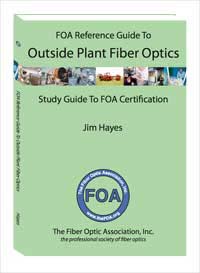
FOA
Reference Guide To Outside Plant Fiber Optics
More
information on the CFOS/O certification .
- CFOS/C: Connectors/Termination
(Skills-based)
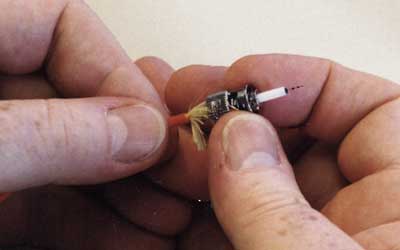
CFOS/C - Certified Fiber Optic
Specialist, Connectors - is the FOA certification for technicians
terminating optical fibers with connectors. The focus of this
certification is the direct attachment of connectors to
fibers using adhesive/polish methods and the techniques required for
making proper multimode and singlemode terminations. These techniques are
appropriate for manufacturing technicians involved in factories
terminating cables for patchcords and prefab cabling systems.
With the advent of prepolished/splice connectors and fusion splice-on
connectors (SOCs) for field terminations, these have been included in the
splicing certification but are not considered sufficient experience for qualifying for direct certification.
Note: Techs whose experience is primarily with splice-on connectors should see the CFOS/S splicing specialist certification.
Prerequisites: CFOT or CPCT
- What To Expect In Training
Programs For Connectors Specialist Certification
- FOA-Approved training for
Certified Fiber Optic Specialist/Connectors certification meets the
following requirements:
- Classroom sessions on
termination methods, connector types and testing.
- Hands-on labs covering
several styles of connectors and installation methods, such as
epoxy/adhesive, Hot Melt, anaerobic or splice-on connectors.
- Testing connectors made in
hands-on labs showing achievement of insertion loss less than or equal
to the maximum rating of the connectors.
- Inspecting and cleaning
connectors correctly
- Instructor verification of
achievement of advanced skills in termination
- Course includes ~50% lab
time
- Typical Field
Experience For Direct Certification for CFOS/C Connectors Specialist
- To qualify for the CFOS/C
certification, the field, or factory installation experience should meet the following requirements:
- Installation of at
least thousands of adhesive/polish connectors of all types:
epoxy/anaerobic and HotMelt on both multimode and singlemode fibers
- Installation of thousands of splcie-on connectors, both fusion and mechanical types
- Testing connectors made showing
achievement of insertion loss less than or equal to the maximum rating
of the connectors.
- Training by manufacturers
or vendors of appropriate cabling products will be recognized as part
of the experience requirements.
The
applicant must provide data supporting their experience and a
recommendation from a client or customer.
What
To Study To Prepare For The Exam
For
preparation for the CFOS/C course or direct exam, you should take the Fiber
U Basic Fiber Optic Skills Lab self-study course,
Lesson
5: Termination.
-
CFOS/S: Splicing
(Skills-based)
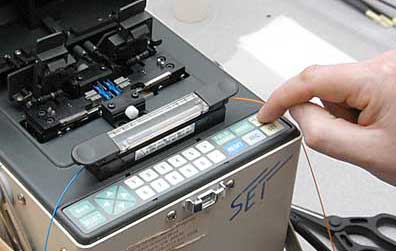
- CFOS/S - Certified Fiber
Optic Specialist, Splicing - is the FOA certification for technicians
splicing primarily outside plant (OSP) fiber optic cable plants for
concatenation and termination with splice-on connectors. The skills focus includes cable
preparation of numerous cables, fusion splicing fibers, placing
splices in splice trays and then placing trays in splice closures.
Splice testing with an OTDR is also covered.
Prerequisites:
CFOT
- What To Expect In Training
Programs For Splicing Specialist Certification
- FOA-Approved training for
Certified Fiber Optic Specialist/Splicing certification meets the
following requirements:
- Classroom sessions in all
types of splicing, including fusion and mechanical splicing;
- Hands-on training in
appropriate splicing types including placement
of the splice into a splice tray and closure
- Interpretation of splice
loss on OTDR traces
- Instructor verification of
achievement of advanced skills in splicing
- Course includes ~50% lab
time
- Typical Field
Experience For Direct Splicing Specialist Certification
- To qualify for the CFOS/S
certification, the field splicing experience needs to meet the
following requirements:
- Making of a total of a at
least hundreds of splices, including placement of the splice into a
splice tray and closure.
- Experience with both fusion
and mechanical splicing which may include termination of cables using
prepolished/splice connectors.
- The applicant must have
experience with OTDR splice loss measurements, including bidirectional
measurements.
- Manufacturer's training on
splicing will be considered as partial experience to qualify for the
certification.
What
To Study To Prepare For The Exam
For
preparation for the CFOS/S course or direct exam, you should take the
Fiber
U Basic Fiber Optic Skills Lab self-study course,
Lesson
4: Splicing.
-
CFOS/T: Testing
(Skills-based)
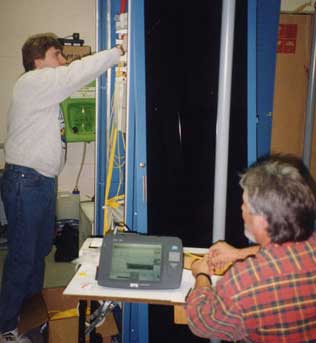
CFOS/T - Certified Fiber Optic
Specialist, Testing - is the FOA certification for technicians testing
fiber optic cable plants and communications systems. This is a
specialist application certification is intended for high level
technicians involved in the testing of fiber optic components, cable
plants during and after installation and troubleshooting of fiber
networks. The KSAs for CFOS/T cover fiber optic testing from concept to
completion, including visual inspection and cleaning, visual tracing and
fault location, optical power measurement, insertion loss testing and
OTDR testing. The requirements also include a familiarity with fiber
characterization for long distance high speed networks but that is
covered in another specialist certification.
Prerequisites:
CFOT
- What To Expect In Training
Programs For Testing Specialist Certification
- FOA-Approved training for
Certified Fiber Optic Specialist/Testing certification meets the
following requirements:
- Classroom sessions covering
all test equipment, methods and standards
- Inspecting
and cleaning connectors correctly
- Training
in both insertion loss testing and optical time domain reflectometry
(OTDR testing)
- Include testing of both
singlemode and multimode fibers
- Understanding of measurement
errors in tests
- May include advanced test
methods (SA, CD, PMD)
- Instructor verification of
achievement of advanced skills in testing
- Course includes ~50% lab
time
Typical Field
Experience For Direct
Testing Specialist Certification Based On Field Experience
- To qualify for the CFOS/T
certification, the field testing experience needs to meet the
following requirements:
- Microscope inspection of
connectors
- VFL testing of hundreds of
links
- Insertion loss tests on
hundreds of links
- OTDR tests on on hundreds of
links (with sample test reports and traces)
- Any other testing (e.g. CD,
PMD, SA testing for fiber characterization)
- Include both multimode and
singlemode fibers
- Manufacturer's training on
testing will be considered as partial experience to qualify for the
certification.
What
To Study To Prepare For The Exam
For
preparation for the CFOS/T course or direct exam, you should take the Fiber
U Fiber Optic Testing self-study course
or read the FOA textbook,
Reference Guide To Fiber
Optic Testing .
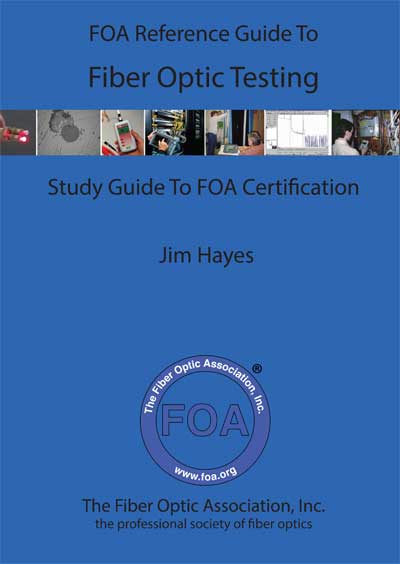
The FOA Reference Guide To
Fiber Optic Testing
CFOS/FC:
Fiber Characterization
(Skills-based)
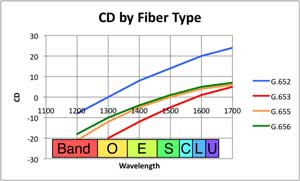
This is a specialist certification
covering fiber optic testing for the purposes of characterizing long
distance fibers used in very high speed WDM networks. It is
intended for technicians involved in the design, installation or testing
of fiber networks.
Prerequisites: CFOT, CFOS/T
recommended
What To Expect In Training
Programs For Fiber Characterization Specialist Certification
- FOA-Approved training for
Certified Fiber Optic Specialist/Fiber Characterization certification
meets the following requirements:
- Classroom sessions covering
theory of singlemode fiber characteristics (SA,
CD, PMD), test equipment, test methods and standards
- Inspecting
and cleaning connectors correctly as a preparation for any testing
- Review of insertion loss
testing and optical time domain reflectometry (OTDR testing)
- Focus on advanced tests and
methods (spectral attenuation (SA), chromatic dispersion (CD) and
polarization mode dispersion (PMD)
- Understanding of measurement
errors in tests
- Course may be taught with
hands-on lab for field techs or without hands-on labs for planners,
designers and engineers
- Instructor verification of
achievement of advanced skills in testing labs as appropriate
Typical
Field
Experience For Direct
Fiber
Characterization Specialist Certification Based On
Field Experience - To qualify for the CFOS/FC
certification, the field testing experience needs to meet the
following requirements:
Experience in
general fiber optic testing and use of test equipment (CFOS/T
equivalent)
- Microscope inspection of
connectors
- VFL testing of hundreds of
links
- Insertion loss tests on
hundreds of links
- OTDR tests on on hundreds of
links (with sample test reports and traces)
Experience testing
long distance high speed fiber optic cable plants using proper test
equipment for:
- Chromatic
dispersion (CD) testing
- Polarization
mode disperson (PMD) testing
- Spectral
attenuation (SA, also called attenuation profile or AP) testing
Additional training
or study:
- Manufacturer's training on
testing will be considered as partial experience to qualify for the
certification.
- Engineering and
design personnel should have experience in designing long haul fiber
networks and working with field techs in the testing and installation.
Contact
the FOA for more information on qualifying for this specialist
certification.
What
To Study To Prepare For The Exam
For
preparation for the CFOS/FC course or direct exam, you should take the Fiber
U Fiber Optic Testing self-study course and the Chapter on Fiber
Characterization in the FOA textbook Reference
Guide To Fiber Optic Testing and in the FOA
Online Guide.
The FOA Reference Guide To
Fiber Optic Testing
CFOS/D: Fiber
Optic Network Design
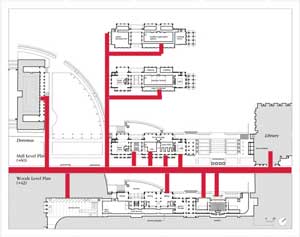
CFOS/D – Certified
Fiber Optic Specialist, Design - is the FOA certification for designers
of fiber optic communications systems. This is a specialist application
certification is intended for technicians involved in the planning,
design and management of installation of fiber networks. The KSAs for
CFOS/D cover fiber optic network design from concept to completion.
This is a specialist application
certification covering fiber optic network design intended
for network owners, IT personnel, facilities managers, network
designers, estimators or technicians involved in the design or
installation of fiber networks. This course is especially recommended
for network owners and planners who may not be familiar with the process
of fiber optic network design as it can make their jobs easier and their
projects better.
Prerequisites: FOA
CFOT certification or, with approval,
equivalent basic knowledge of fiber optics and communications networks acquired through experience or other training. A
review of basic fiber optic concepts and components is included in the
course for review.
What To Expect
In Training
Programs For Design Specialist Certification
To qualify for Certified Fiber Optic Specialist/Design certification, a
specialist training program must cover at least the following topics:
- Introduction to fiber optic
design
- Overview of Fiber Optic
Installations both outside plant and premises
- Planning A Fiber Optic
Network
- Choosing components
- Design Review (Component
compatibility, Power budget, Environmental requirements etc.)
- Testing And documentation
- Estimating
- Writing A Project
Specification and other documentation
- Lab Exercises including case
studies covering designing several networks, at least one premises and
one outside plant.
- Typical
Field Experience For Design Specialist Certification
- To
qualify for
the certification, two years field experience with fiber
optic
networks are required, including documented experience
designing fiber
optic networks. All candidates must have basic fiber optic
knowledge, e.g. a FOA CFOT certification. Training by
manufacturers or vendors of cabling
products may be recognized as part of the experience
requirements.
The applicant must provide data supporting their experience
and a
recommendation from a client or customer.
Direct applicants for
CFOS/D certification are expected to provide documentation of their
involvement with several complete fiber optic cabling projects, including
some of the following design tasks:
- Planning the
network
- Creating
documentation
- Choosing
routes, getting permissions
- Choosing
equipment, hardware and components
- Evaluating and
selecting contractors
- Planning and
supervising the installation process including progress reviews
- Planning for
operation
- Updating
documentation
What
To Study To Prepare For The Exam
For
preparation for the CFOS/D course or direct exam, you should take the Fiber
U Fiber Optic Network Design self-study course or the FOA
Textbook.
FOA
Reference Guide To Fiber Optic Network Design
More
information on the CFOS/D certification
.
Applications Specialist
Certifications For Users, Designers, Contractors and
Installers
Applications-based
certifications are based on specific applications of fiber optics like
fiber to the home (FTTH) or optical LANs (OLANs.) These
application-based certifications do not require a CFOT or CPCT as a
prerequisite but do require a basic knowledge of fiber optics. That
basic knowledge may be obtained online, for example using the free Fiber
U Basic Fiber Optics or Premises Cabling course or an
introductory presentation at a school prior to the start of the actual
course.
Note:
Techs doing fiber installation
for any particular application should have a CFOT to be qualified
for doing installation work. The CFOT is the basic certification
required for all installation personnel.
CFOS/H: FTTx,
Fiber To The Home/Premises/Curb/Node, etc. For Broadband. (Application-based)
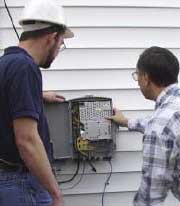
This is an
application specialist
certification covering broadband FTTx networks, cabling design and
installation, which includes PON networks (formerly
FOA CFxT) It is intended for anyone interested in the application of FTTH
networks.
Prerequisites: CFOT, CPCT
or or
equivalent basic knowledge of fiber optics and communications
networks. If
attendees are not already familiar with or trained in optical
fiber, a fiber review is available as part of the course.
What To Expect
In Training
Programs For FTTX Specialist Certification
To qualify for Certified FTTX Specialist certification, a specialist
training program must cover at least the following topics:
-
Introduction to FTTx (FTTC and FTTH) networks
- Overview of FTTx
architectures including Point-to-Point and PONs with relevant
Standards
- FTTx Components and
Installation Methods
- FTTx Testing
(including PONs)
- Lab Exercises
covering design, installation and testing
Typical
Field
Experience For FTTx Specialist Certification
To qualify for the FTTx certification, two years field experience
designing and installing FTTx networks are required.
Training by manufacturers or vendors of cabling products will be
recognized as part of the experience requirements.
The
applicant must provide data supporting their experience and a
recommendation from a client or customer.
What
To Study To Prepare For The Exam
For
preparation for the CFOS/H course or direct exam, you should take the Fiber
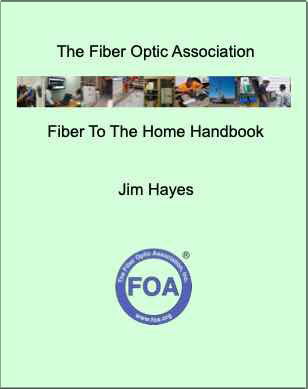
U FTTx self-study course or read the FOA
FTTH Handbook
You can also read
the appendix on FTTx in the FOA OSP textbook FOA
Reference Guide To Outside Plant Fiber Optics Appendix
B .(not as comprehensive.)
CFOS/L: Optical LANs (OLANs) (Application-based)
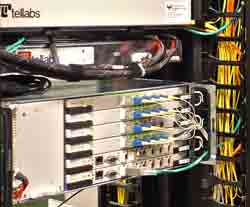
This is an
application specialist
certification covering optical LAN (OLAN) networks, cabling
design and installation, which includes P2P and PON networks used in place
of traditional LAN cabling based on traditional structured cabling
standards for copper/fiber networks. It
is intended for anyone interested in the use of fiber optics in LANs.
Prerequisites:
CFOT, CPCT or or
equivalent basic knowledge of fiber optics and communications
networks recommended. If
attendees are not already familiar with or trained in optical
fiber, a fiber review is available as part of the course.
What
To Expect In Training
Programs For OLAN Specialist Certification
To qualify for Certified Optical LAN Specialist certification, a
specialist training program must cover at least the following topics:
-
Introduction to optical LAN: centralized fiber, P2P and PON networks
- Overview of network
architectures including Point-to-Point and PONs with relevant
standards
- OLAN Components and
Installation Methods
- OLAN Testing
(including PONs)
- Lab Exercises
covering design, installation and testing
Typical
Field
Experience For Direct OLAN Specialist Certification
To qualify for the certification, two years field experience designing
and installing optical LAN or other optical premises networks are
required.
Training by manufacturers or vendors of cabling products will be
recognized as part of the experience requirements. The
applicant must provide data supporting their experience and a
recommendation from a client or customer.
What
To Study To Prepare For The Exam
For
preparation for the CFOS/L course or direct exam, you should take the Fiber
U Optical LAN (OLAN) self-study course or read the FOA textbook on
premises cabling, Appendix B.
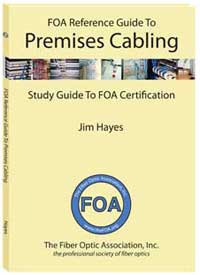
FOA
Reference Guide To Premises Cabling Appendix B
CFOS/W: Fiber For
Wireless - Includes WiFi, Cellular Fiber To The Antenna and DAS (Application-based)

CFOS/W - Certified Fiber Optic
Specialist, Fiber For Wireless - is the FOA certification for technicians
installing wireless communications systems that are connected on fiber
optics. This course is an application specialist course focusing on
educating technicians and managers about what is involved in connecting
cell site backhaul and fronthaul, antennas on cell towers, small cells,
distributed antenna systems (DAS), and WiFi access points for premises,
urban and rural line-of-sight WiFi networks. Skills for technicians should
be learned for other certifications.
Prerequisites:
CFOT, CPCT or
or
equivalent basic knowledge of fiber optics and communications
networks. If
attendees are not already familiar with or trained in optical fiber,
a fiber review is available as part of the course or the student can
take the basic fiber course at
Fiber U.
What To Expect In Training
Programs For Fiber For Wireless Specialist Certification
To qualify for Certified Fiber For Wireless Specialist certification, a
specialist training program must cover at least the following topics:
- Cellular wireless technology
- Fiber to cellular wireless
tower architectures
- Fiber To The Antenna
- Small cells
- DAS (distributed antenna
systems)
- WiFi technology
- Enterprise WiFi
- Metropolitan WiFi
- Line Of Sight WiFi
- Rural WiFi
- Testing the components and
installed cable plant
Typical
Field
Experience For Direct CFOS/W Specialist Certification
To qualify for the certification, two years field experience designing
and installing wireless fiber systems is required.
Training by manufacturers or vendors of cabling products will be
recognized as part of the experience requirements. The
applicant must provide data supporting their experience and a
recommendation from a client or customer.
What
To Study To Prepare For The Exam
For
preparation for the CFOS/W course or direct exam, you should take the Fiber
U Fiber For Wireless self-study course.
CFOS/DC Data Center Cabling (Application-based)
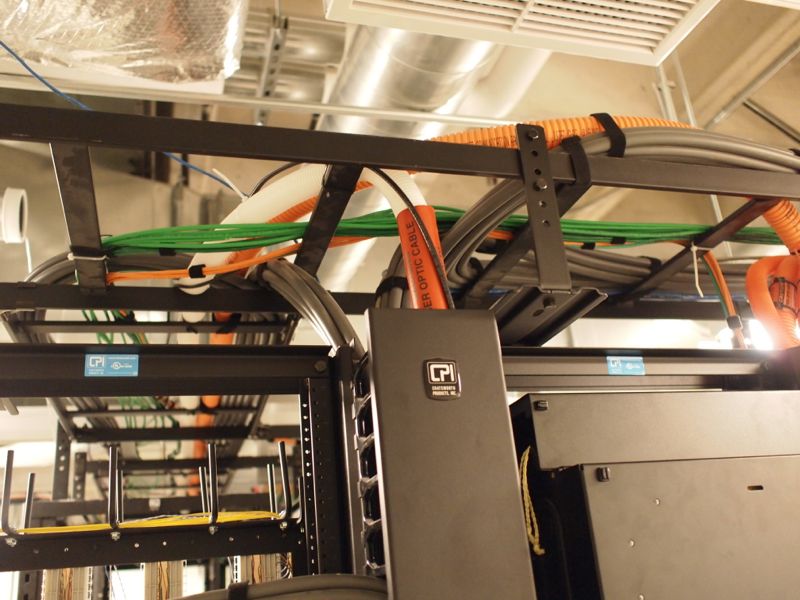
This is an
application specialist
certification covering the cabling used to connect servers,
switches and storage in data centers. It covers all types of cabling: UTP
copper, coax copper, optical fiber and active optical cables (AOCs).. It
is intended for anyone interested in the current state of the art in
data center cabling.
Prerequisites:
CFOT, CPCT or
or
equivalent basic knowledge of fiber optics and communications
networks. If
attendees are not already familiar with or trained in optical fiber
and premises cabling, a fiber review is available as part of the
course.
What
To Expect In Training
Programs For Data Center Cabling Specialist Certification
To qualify for Certified
Data Center Cabling Specialist certification, a specialist training
program must cover at least the following topics:
- Data center
equipment architecture
- Data center
cabling options
- Installation of
various cable types, termination options
- Testing short
cable runs
Typical
Field
Experience For Direct FTTA Specialist Certification
To qualify for the certification, two years field experience designing
and installing data center cabling systems is required.
Training by manufacturers or vendors of cabling products will be
recognized as part of the experience requirements. The
applicant must provide data supporting their experience and a
recommendation from a client or customer.
What
To Study To Prepare For The Exam
For
preparation for the CFOS/DC course or direct exam, you should take the Fiber
U Data Center Cabling self-study course.
-
- Return
to The FOA Home Page
Changes
- The
FOA reserves the right to make changes to the certification programs without notice.
-
(C) 2023, The Fiber Optic Association,
Inc.